No, grants cannot be backdated. All information must be submitted during the application process & must be approved before any work is carried out.
A Heat Loss Indicator (HLI) is a numerical measure that quantifies how much heat a building loses through its structure — including walls, roofs, floors, windows, and doors — relative to its size. It gives homeowners, builders, and energy assessors a simple, standardised way to evaluate the thermal efficiency of a home.
The lower the HLI score, the less heat the building loses, and the more energy-efficient it is. Conversely, a higher HLI score indicates significant heat loss, leading to higher heating bills and a less comfortable living environment.
If you hold an existing BER Certificate, your HLI is shown on the advisory report that accompanied your certificate. It is typically located on page 3 of the report. Please note: Advisory reports issued prior to 2020 do not display the HLI.
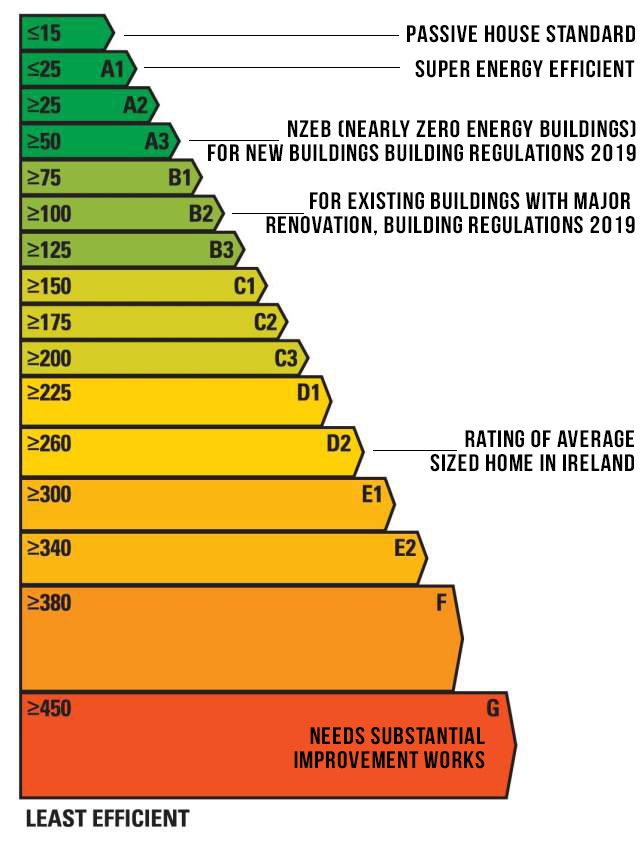
The HLI is typically derived from a combination of factors assessed during an energy survey or audit of the property:
The result is expressed in watts per degree Kelvin (W/K) or sometimes as watts per square metre per degree Kelvin (W/m²K), giving a measurable indication of energy performance.
Understanding your home’s HLI is a critical first step in making meaningful energy improvements. Here’s why it matters:
💰 Bills – A high HLI means your heating system must work harder to maintain a comfortable temperature, leading to significantly higher energy bills.
🌡️ Comfort – Poor heat retention leads to cold spots, draughts, and temperature inconsistency throughout the home.
🌍 Carbon – Heat loss is a major contributor to a household’s carbon footprint. Reducing your HLI helps lower your environmental impact.
🏠 Value – Homes with better energy ratings (linked to lower HLI) command higher resale values and are increasingly attractive to buyers.
Most homes — especially older properties — suffer from one or more of the following heat loss sources:
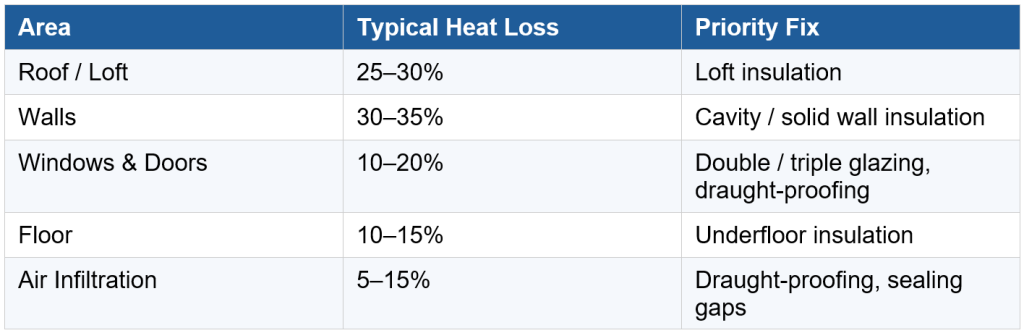
Improving your HLI doesn’t have to mean a complete home renovation. There are measures at every budget level:
A professional energy assessor can calculate your home’s HLI as part of a home energy audit or SAP (Standard Assessment Procedure) calculation. This is commonly done when:
You can also use online tools and calculators to get a rough estimate of your home’s heat loss before commissioning a full survey.
The Heat Loss Indicator is one of the most powerful tools available to homeowners and professionals for understanding and improving the energy efficiency of a home. By identifying where and how much heat is being lost, targeted improvements can be made that deliver real, measurable reductions in energy bills, carbon emissions, and improve overall comfort — making your home warmer, greener, and more cost-effective to run.